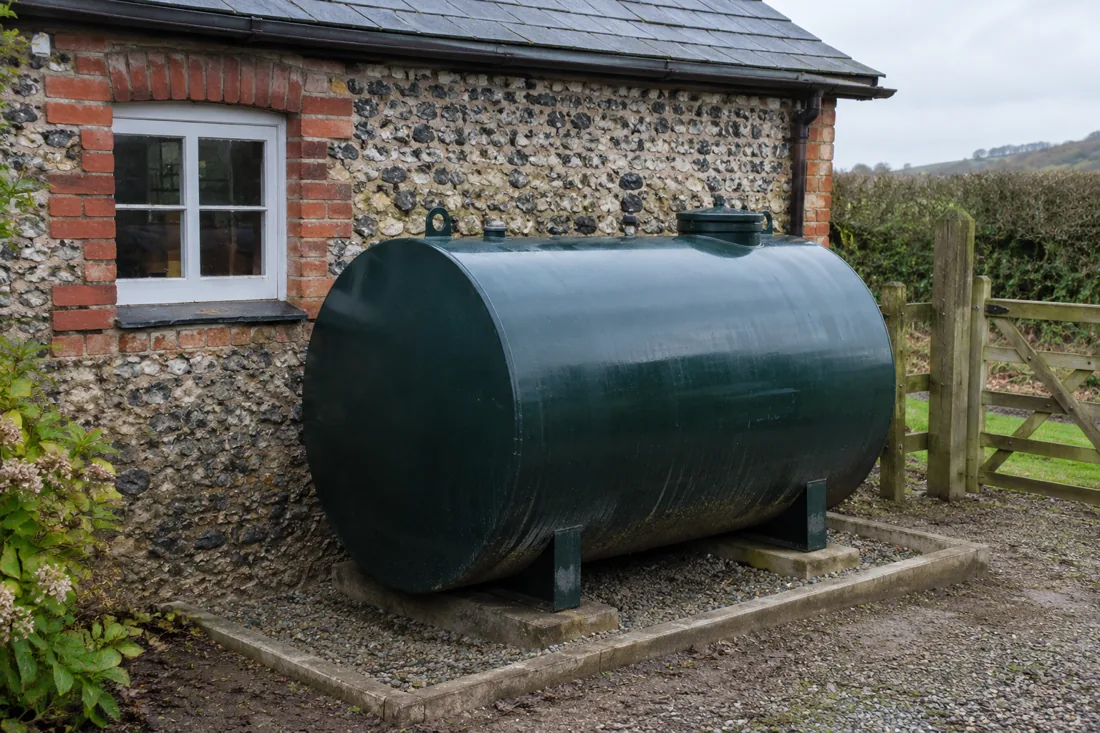
Decide What Needs To Leave
An unused oil tank still needs a planned removal, even when the gauge reads empty. Residual fuel, sludge and contaminated water can remain below the outlet. The first task is to establish what the tank held, whether anything still depends on it and how it can leave the property safely.
Removal may follow a heating change, a property sale, a garden project or the discovery of damage. Tell us which applies. If you still need oil heating, a coordinated replacement is usually a different scope from taking an obsolete tank away and leaving the area clear.
A Removal Plan For Your Property
The route out matters as much as the tank's size. A tank behind a Devon cottage might have arrived before an extension, fence or garden wall was built. Photographs from the tank to the vehicle standing area help identify gates, corners, steps and changes of level before equipment is selected.
A sound route may allow removal in one piece. Restricted access may require controlled dismantling after the tank has been emptied and cleaned. Do not cut, puncture or burn an old tank yourself. The absence of visible liquid does not establish that a tank is safe to work on.
On a sloping plot, the assessment also considers safe equipment positioning, ground strength and where an accidental escape could flow. Mention steep drives, soft lawns, overhead obstructions and any shared access that needs to stay open.
What Happens To The Remaining Oil
Give the approximate fuel level when you enquire, even if it is only an estimate. Usable heating oil may be recoverable for an agreed destination, but water, sediment or the wrong product can change that decision. Fuel quality and the receiving tank must be checked before any transfer is agreed.
Do not arrange a final delivery just before removal. If there is fuel on order, tell the supplier that work is being planned. An active fill point must not be left available for an accidental delivery after its tank has gone.
The Work, In Order
The contractor confirms the scope and isolates the tank from the equipment it serves. Remaining liquids are recovered, internal residues removed and the condition assessed. Only then is the agreed lifting or dismantling method used, with controls appropriate to the atmosphere and the work.
The tank material and residues leave through suitable waste routes. The final stage is to check the agreed clearance area and deal with redundant fill points or pipework within the quoted scope. Tank removal does not automatically include demolishing the base, landscaping or investigating contaminated soil.
Cost And Commercial Planning
Capacity, construction, quantity of residual oil, cleaning needs and the route to the collection vehicle all affect cost. Removing a small accessible plastic tank is a different operation from dismantling steel storage in an enclosed plant area. Ask for base removal and making good to be listed separately if you want them included.
Commercial premises should identify the person authorising isolation and the equipment that must remain operational. Schools, farms and business sites may need a shutdown window, site induction, vehicle segregation or a lifting plan. Those requirements need agreeing before the visit rather than being left to the working day.
Records And The Next Use Of The Space
Ask who will carry the waste and how its destination will be recorded. Waste documentation depends on the material, classification and movement. A removal record should identify the tank and work completed, with the appropriate waste transfer or hazardous waste documentation where applicable.
Keep the records with your property or site file. If you are selling or redeveloping, tell the contractor what your solicitor, buyer or consultant has requested. A tank removal record is not proof that surrounding ground is free from contamination, and a separate investigation may be needed where a leak is suspected.
Send A Useful Removal Enquiry
Include the postcode, tank material and approximate dimensions, last known contents and whether it is above or below ground. Add the amount of oil left and explain whether the boiler or other equipment is still connected. A label photograph is useful if it can be taken safely from ground level.
Photograph the whole tank, its base, nearby buildings and the route out. Mention drains, streams, wells and boreholes, together with any visible staining or oil smell. If access crosses a neighbour's land, establish the permission needed before a work date is arranged.
Your Questions
Can An Empty Tank Go Straight To Scrap?
An empty tank can retain oil residue and vapour, so its condition must be assessed before handling or dismantling. Cleaning and preparation come before the agreed removal method. The receiving waste facility also needs to be suitable for the material and its contamination, rather than assuming any scrap collection will accept it.
Does Removal Include The Concrete Base?
Base removal needs to be specified in the removal quotation. Some customers want the existing platform retained for another use, while others need excavation and making good. Tell us your intended finish and whether buried pipes are known to be present, so tank removal and ground work can be priced with clear boundaries.
Further guidance: GOV.UK: home oil storage, business oil storage and HSE: confined spaces.
Tell Us About Your Tank
Start with your postcode, what has changed and how the tank can be reached. A suitable service provider can then respond about the next assessment.
Make A Tank Enquiry