Design Around The Property
A new oil tank installation starts with the purpose of the storage. A home heating system, workshop supply and standby generator can have different operating needs. Describe the fuel, the equipment it serves and the expected pattern of use before choosing a capacity or tank shape.
For a rural Devon property, the installation also needs to fit the way fuel reaches the site. A narrow approach, steep drive or distant garden can affect the delivery arrangement. The tank should work for routine filling and inspection long after the installation equipment has left.
Assess The Position First
The proposed location needs a firm, level support suited to the chosen tank and its loaded weight. On a sloping plot, that can involve ground preparation and retaining considerations rather than simply placing paving on the surface. Existing slabs should not be assumed suitable for a different tank.
Fire separation, boundaries and pollution pathways also influence the choice. Mention doors, windows, outbuildings, drainage covers, streams and private water supplies. The assessment needs to consider where a spill could travel, not just what stands immediately beside the tank.
A secluded spot may look attractive but make delivery and maintenance awkward. Leave room to inspect the tank, reach fittings and manage the surrounding vegetation. Any proposed screening should be considered alongside access and safety requirements rather than installed first.
Select A Tank For Its Job
Capacity should reflect real consumption and delivery arrangements. Tell us how the building is used, whether it is occupied seasonally and whether an extension or additional appliance is planned. For commercial equipment, provide the duty cycle and any reserve requirement rather than applying a household rule of thumb.
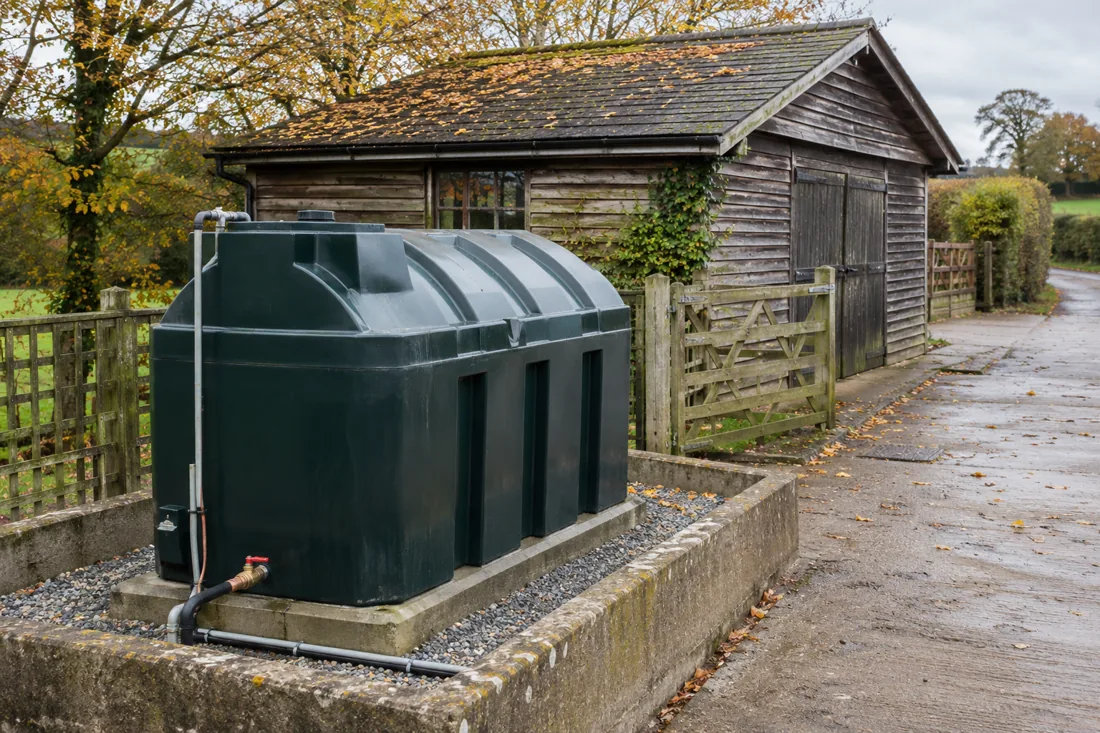
Plastic and steel tanks come in different shapes and containment arrangements. A slim format can help with a restricted footprint, but it still needs the correct base, clearances and access route. Ask for the exact dimensions and manufacturer installation requirements before approving a product.
Agree The Installation Sequence
A survey or sufficiently detailed photographs establish the initial scope. The contractor then specifies the tank, support, pipe route and delivery arrangement, with any ground works agreed before a date is fixed. Where a new base needs curing, the programme must allow for it.
The tank is positioned only after the support is ready. Pipework, filters, valves and connections are installed for the system, then checked and commissioned as appropriate. Agree who coordinates the initial fuel delivery and the heating engineer so the tank is not filled before the system is ready.
Building And Environmental Requirements
New domestic oil storage in England must meet Building Regulations. Ask how the work will be notified or certified and what evidence you will receive at completion. Listed buildings or protected settings can need additional advice before physical changes are made.
Commercial fuel storage requires assessment against the rules applicable to the fuel and installation. Secondary containment, filling controls and impact protection can form part of that design. Business guidance includes exceptions, so the use and storage arrangement must be described accurately rather than treating every tank as identical.
Access, Fuel And Cost Drivers
Send the approach from the public road as well as the last few metres to the tank. Describe gate widths, overhead restrictions, weak bridges, soft verges and places where vehicles cannot turn. Tell us if access is shared or if livestock, visitors or deliveries must be kept separate from the work.
The cost can include tank supply, ground preparation, base construction, pipework, safety fittings and commissioning. Long pipe runs, difficult excavation or lifting equipment can change the scope. A written quote should show exclusions and any assumptions about buried services or ground conditions.
If another tank already contains usable oil, discuss whether transfer is possible. Its condition and compatibility need assessment before it enters the new installation. If there is no existing supply, initial fuel purchase should be considered separately from the physical installation unless the quote expressly includes it.
Records That Belong With The System
Keep the tank specification, warranty, installation information and commissioning records together. Request the appropriate Building Regulations evidence and an explanation of the notification route. Commercial sites may also need the agreed risk assessments and operational instructions in their maintenance file.
At handover, ask where deliveries connect, how the level is checked and what should prompt an inspection. Follow the manufacturer and installer guidance on maintenance. Make sure anyone ordering fuel knows the correct tank and product, particularly on premises with more than one store.
Prepare Your Enquiry
Send your postcode, property use, proposed tank location and the equipment it will serve. Include a sketch or photos showing the intended pipe route and nearby buildings. State whether you have a private water supply, a known flood issue or planned construction near the proposed position.
If you are working with a builder, heating engineer or project manager, identify who will coordinate the stages. Early agreement avoids a completed base or trench having to change once the tank specification is finalised.
Your Questions
Can A New Tank Go On A Sloping Garden?
A sloping garden needs an assessment of the ground and a suitable level support for the tank. The whole installation must be considered, including access and potential oil flow towards drains or neighbouring land. Send wide photographs of the slope and proposed position so ground preparation can be included in the scope.
Should I Order The Tank Before A Survey?
Ordering a tank before its position and access are checked can create avoidable problems. The dimensions, support requirements and containment need to suit the property and fuel use. Agree the proposed product with the installer first, including the route into place and the details of the base and pipe connections.
Further guidance: GOV.UK: home oil storage, business oil storage and HSE: confined spaces.
Tell Us About Your Tank
Start with your postcode, what has changed and how the tank can be reached. A suitable service provider can then respond about the next assessment.
Make A Tank Enquiry