Oil Tank Services Across Devon
Rural access, property layout and the tank itself shape the work. Send your postcode so availability and the next assessment can be confirmed.
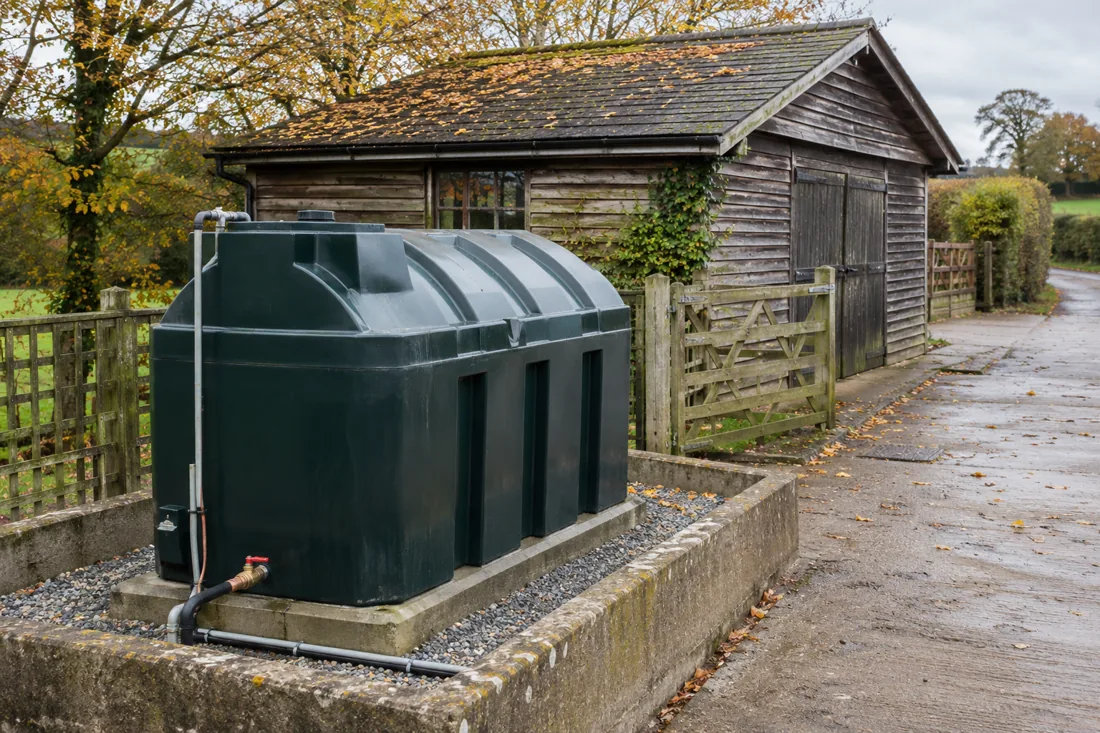
A County-Wide Enquiry Starts Locally
We welcome enquiries from Exeter, Plymouth and towns and rural properties across Devon. The areas below are a starting point, rather than a promise of attendance on a particular day. Tell us the exact location and type of work so a suitable provider can confirm coverage.
The local research points to three useful considerations: rural oil dependence, sensitive water environments and older properties. These affect the questions to ask before moving machinery, altering a tank position or agreeing a removal.
Crediton, Tiverton And Mid Devon
Crediton and Tiverton enquiries can include villages and scattered rural properties as well as town addresses. Mid Devon District Council's listed-building guidance covers houses, farm buildings and other structures, and explains that protection can extend to boundary features and some curtilage buildings.
If tank access involves an old wall, gate or outbuilding, check the position before altering it. Send photographs of the whole route and mention listed status early. A new base or rerouted pipework should be considered alongside any necessary conservation advice.
Read Mid Devon's Listed Building GuidanceHoniton, Axminster And East Devon
The supplied East Devon National Landscape research identifies the Axe and Otter floodplains as part of the area's landscape. The Environment Agency has also highlighted the risk heating oil escapes pose to groundwater in Devon and Cornwall.
For properties around Honiton and Axminster, describe nearby ditches, drainage and private water supplies rather than assuming distance from the coast or a main river removes pollution risk. If the tank sits on a slope, wide photographs help explain potential flow paths and the space available for equipment.
Read The Environment Agency's Local Oil Tank AdviceBarnstaple, Bideford And North Devon
North Devon Coast National Landscape's own overview describes a protected coastal landscape including Combe Martin and Braunton Burrows. Devon County Council's heating-oil research also identifies rural dependence on oil across the wider county. Neither fact tells us whether a particular lane will accept the vehicle needed for your tank.
For Barnstaple, Bideford and surrounding rural enquiries, include the approach from the road, turning space and seasonal ground conditions. If the property lies within a protected landscape, mention that before a new position, excavation or screening is proposed.
Read About The North Devon Coast LandscapeOkehampton, Tavistock And West Devon
We welcome tank enquiries around Okehampton, Tavistock and Holsworthy. For farms, distinguish fuel used by vehicles from the tank feeding the building's heating system. For oil-heated households, explain whether a shutdown will also interrupt hot water.
Tell us whether the tank serves a house, agricultural operation or other commercial equipment. Include farm traffic, livestock separation and shared yard access in the description. Household and business storage should be assessed for their actual use rather than grouped together simply because both sit on rural land.
Exeter, Plymouth And South Devon
Enquiries are also welcome from Exeter, Plymouth, Newton Abbot, Totnes and Torquay. The county research treats Plymouth and Torbay separately from the Devon County Council area, so county-wide figures should not be assumed to describe each place. We use the property information you provide to develop the enquiry instead.
Town and city properties can present different constraints from open rural plots: rear-garden access, neighbouring boundaries or a tank enclosed by later building work. Tell us about those conditions if they apply. The removal guide explains why the route out needs checking before a method is agreed.
Your Property Is The Useful Detail
A place name cannot show whether a tank sits below a driveway, above a stream or behind a narrow passage. Send your postcode, a safe photograph of the tank and a view of the route from the vehicle position. Mention known drainage, flood history and restrictions on access.
Tell Us About Your Tank
Start with your postcode, what has changed and how the tank can be reached. A suitable service provider can then respond about the next assessment.
Make A Tank Enquiry